Black Seed Oil (Nigella Sativa): The Complete Guide
At a glance (TL;DR)
- Black seed oil, kalonji, black cumin, nigella and habbatus sauda are all the same seed: Nigella sativa.
- Its key compound is thymoquinone; taken for everyday immune and antioxidant support.*
- Formats: cold-pressed oil, softgels, capsules or gummies; pick the one you will use daily.
Quick answer: Black seed oil is pressed from the seeds of Nigella sativa, the same seed known as kalonji, black cumin, or habbatus sauda. It naturally contains thymoquinone, the compound behind most of its research interest, and has been used for generations across Middle Eastern and South Asian wellness traditions. Today it's taken as oil, softgels, or gummies for everyday immune and antioxidant support.*
Black seed might be the world's best example of one ingredient hiding behind five names. Search for black seed oil, kalonji, black cumin, nigella, or habbatus sauda and you'll find the same small black seed. It's one of the oldest continuously used ingredients in traditional wellness, and lately one of the fastest-growing supplements in the US. This guide sorts out the names, explains thymoquinone, summarizes what research actually suggests, and compares every format so you can pick the right one.
One seed, five names
Let's clear the confusion first, because it costs shoppers real money (the same product sells under different names at different prices):
- Black seed / black seed oil: the common US supplement name.
- Nigella sativa: the botanical name; "nigella" on spice shelves.
- Kalonji: the South Asian name, standard in Indian and Pakistani kitchens.
- Black cumin: a common translation; not related to regular cumin.
- Habbatus sauda: the Arabic name, used across the Middle East and Southeast Asia.
All the same seed. One caution: "black cumin" occasionally also refers to a different spice (Bunium bulbocastanum). With supplements, look for Nigella sativa on the label to be sure of what you're buying.
What's actually in it: thymoquinone
Black seed's research story centers on thymoquinone, a compound found in meaningful amounts almost nowhere else. Cold-pressed black seed oil retains it naturally, which is why extraction method appears on serious labels. Alongside thymoquinone, the oil carries a fatty-acid profile of linoleic and oleic acids plus other seed compounds, but thymoquinone is the reason this seed has thousands of published studies while its spice-rack neighbors have a handful.
Levels vary with seed quality and processing, which is one reason cold-pressed, single-ingredient sourcing is worth insisting on (more on quality below).
What the research suggests
Black seed has an unusually large research literature for a traditional botanical, yet it's still early for large, definitive human trials. Framed honestly:
- Everyday immune support. The area with the deepest research attention. Studies have explored how Nigella sativa and thymoquinone interact with the body's natural defenses, and traditional use points the same direction. This is the seed's classic modern positioning.*
- Antioxidant properties. Thymoquinone has been studied extensively for antioxidant activity, helping the body manage everyday oxidative stress.*
- General wellness. Beyond those two, researchers have explored many directions; most remain at the laboratory or small-study stage. Where the evidence is preliminary, we say so. We don't position black seed to treat any condition.
What you're buying with black seed is a rare combination: genuinely deep traditional use and a busy modern research field, in one seed.*
A seed with centuries behind it
Black seed has been found in archaeological sites dating back millennia and holds a special place across Middle Eastern and South Asian wellness traditions, kept in home kitchens and medicine cabinets alike, generation after generation. In South Asia, kalonji is also simply food: sprinkled on naan, folded into pickles and curries. That dual identity, kitchen staple and wellness staple, is why the seed never needed rediscovering. It never left.
Every format, compared
Black seed comes in more formats than almost any herb we carry. Here's the honest map:
Black seed oil (bottled). The classic: cold-pressed oil taken by the spoon. Full-strength experience, including the famously sharp, peppery taste that many people never get used to. Our Black Seed Oil 500mL is single-ingredient, cold-pressed Nigella sativa, nothing added.
Black seed oil softgels: the top seller. Black Seed Oil Capsules 1600mg seal cold-pressed oil in a Halal softgel: the full oil, a measured 1600mg serving, zero taste. This is the format most people settle on for daily use, and our most popular black seed product. Extra strength, 60 Halal softgels per bottle.
Kalonji seed capsules. Different from oil capsules: Kalonji (Black Seed) Capsules 350mg contain the seed itself, ground. It's the whole-food approach in capsule form, for people who want the seed rather than the pressed oil.
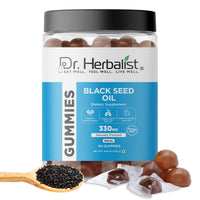
Black seed oil gummies. The gentlest on-ramp: Black Seed Oil Gummies (60 ct) and (90 ct) carry cold-pressed oil in a chewable, great-tasting, individually wrapped gummy. Halal certified, made without pork-derived gelatin or alcohol. If gummies are your format, read what to look for in halal gummies.
Whole seeds. Whole Black Seeds (Kalonji) 350g is the kitchen format: toast, grind, sprinkle. Single-ingredient, food-grade, and the cheapest way to make black seed a daily habit through cooking.
Full side-by-side: Black Seed (Nigella Sativa): Capsules, Gummies & Oil Compared.
Which format is right for you?
- Want the strongest traditional experience and don't mind the taste? Bottled oil.
- Want the oil daily, without tasting it? Softgels. That's why Capsules 1600mg is our top seller.
- Want the whole seed, not the oil? Kalonji capsules, or whole seeds in your cooking.
- Hate swallowing pills? Gummies.
- Cook South Asian food anyway? Whole seeds. You're already halfway there.
However you take it: follow the label's directions, and if you're pregnant, nursing, on medication, or managing a health condition, check with your healthcare professional first.
How to judge quality (any brand)
- "Nigella sativa" named on the label, not just "black cumin."
- Cold-pressed, which protects the seed's naturally occurring thymoquinone.
- Single-ingredient for oils, seeds and powders; short readable lists for capsules and gummies.
- Halal certification if your household keeps halal. Softgels and gummies are the formats where this is hardest to verify without a mark; our complete halal supplements guide explains why.
- A brand that answers sourcing questions: where the seed comes from, how it's pressed, what the shell is made of.
The full Dr. HERBALIST black seed range lives in the Immune Support collection, with softgels in Oil Softgels and chewables in Gummies. For the research deep-dive on the immune side, read Black Seed Oil and Your Immune System: What the Research Shows.
Frequently asked questions
What is black seed oil good for?
It's traditionally taken for everyday immune support, and thymoquinone, its signature compound, has been widely studied for antioxidant properties.* Beyond that the research is promising but early, and it isn't positioned to treat any condition.
Are black seed, kalonji, and black cumin the same thing?
Yes, they're all names for Nigella sativa. Black seed is the US supplement name, kalonji the South Asian name, habbatus sauda the Arabic name. One caution: "black cumin" occasionally refers to a different spice, so check for "Nigella sativa" on the label.
What is thymoquinone?
The key naturally occurring compound in black seed and the focus of most of its research. Cold-pressing preserves it; it's scarce in almost any other food.
Black seed oil vs capsules: which is better?
Same oil, different experience. The bottle gives the full traditional (sharp, peppery) experience; softgels give a measured 1600mg serving with no taste. Most daily users choose softgels; gummies suit anyone who dislikes pills.
Is black seed oil halal?
The seed and its oil are plant-derived and permissible. Finished formats need checking, since softgel shells and gummy bases are the usual question marks. Dr. HERBALIST black seed softgels and gummies are Halal certified, made without pork-derived ingredients or alcohol.
How should I take black seed oil?
As directed on the label of your product. A measured format exists precisely so you don't guess. Consistency beats quantity: it's typically taken daily over time, not as a one-off.
*These statements have not been evaluated by the Food and Drug Administration. This product is not intended to diagnose, treat, cure, or prevent any disease.