Castor Oil in Your Belly Button: What the Trend Actually Does
At a glance (TL;DR)
- Navel oiling is an old Ayurvedic ritual gone viral; there is no 'Pechoti gland' behind the belly button.
- What is real: it moisturizes the skin there, and the nightly ritual can be calming.
- For castor oil to work from the inside, a measured swallowed format is the evidence-consistent route.
Quick answer: Putting castor oil in your belly button, called "navel oiling" or "navel pulling," is an old Ayurvedic-rooted ritual that's gone viral. Science says the navel has no special pipeline to your organs, so the internal claims don't hold up. What's real: it moisturizes the skin there, and the nightly ritual itself can be calming. If you want castor oil working from the inside, swallowing a measured format is the evidence-consistent route.
If your feed looks like ours, someone this week rubbed castor oil into their belly button on camera and promised it would fix digestion, sleep, cramps, and hormones. The clip gets millions of views. The comments split between "it changed my life" and "this is nonsense." Since we make castor oil products, people ask us about this trend constantly, so here's the straight answer.
Where the trend comes from
Navel oiling isn't a TikTok invention. Applying oil to the navel appears in Ayurvedic tradition, where the belly button is treated as an energetic center of the body, and versions of the practice exist in several cultures' home-remedy repertoires. Social media took that old ritual, attached modern health promises to it, and made it a trend.
The claim, and the anatomy
The viral version of the claim usually leans on something called the "Pechoti gland," supposedly a gland behind the navel that absorbs oils into your system. Here's the plain fact: no such gland exists in human anatomy. Your belly button is what remains of the umbilical cord. It's residual scar tissue. After birth, that old supply line closes permanently. There is no direct connection from your navel to your digestive system, liver, or anything else.
So oil placed in the navel does what oil placed on any skin does: it sits on skin. A small amount may absorb into the skin locally, the same way a moisturizer does, but it is not entering your organs by a special door.
What's actually real here
Three honest things:
1. It moisturizes a spot everyone ignores. The navel is skin, it gets dry, and castor oil is a genuinely good emollient. If your belly button is flaky or itchy, a drop of oil is a perfectly sensible cosmetic fix.
2. The ritual can be real even when the mechanism isn't. A slow, warm, self-care minute before bed, same time every night, lights low, is the kind of routine that helps people unwind. If navel oiling is the anchor that makes you do it, the benefit you feel may be the ritual. And that's not nothing.
3. It's low-risk. A drop of quality castor oil in the navel harms almost no one. Use clean hands, patch test if you're sensitive, and skip it if the skin is broken or irritated. (Oily stains on clothes are the main casualty.)
What it is not: a digestion treatment, a hormone tool, or a shortcut into your bloodstream. No study supports those claims.
If you want castor oil to work from the inside
Here's the logical gap in the trend: people who want castor oil's internal tradition are applying it to the outside of their abdomen. If the inside route is what interests you, the evidence-consistent way is simply to take it, in a measured, label-directed format:
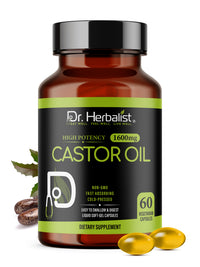
- Castor Oil Capsules 1600mg: cold-pressed, hexane-free oil sealed in a Halal softgel. A precise serving, no taste, no mess, no stained pajamas.
- Castor Oil Gummies: the chewable version, individually wrapped with no added sugar (90 ct here).
Both follow the same rules as anything ingestible: take as directed on the label, don't exceed it, and check with your healthcare professional first if you're pregnant, nursing, or on medication. For the full picture of what ingestible castor oil is (and isn't), read our complete castor oil guide.
Prefer the topical world? The abdomen version of this practice with actual tradition behind it is the compress. See Castor Oil Packs: How to Use One and What to Expect.
Frequently asked questions
What does putting castor oil in your belly button do?
It moisturizes the skin of the navel, and for many people the nightly ritual is relaxing. There's no scientific evidence it affects digestion, hormones, sleep, or internal organs. The navel has no internal connection for the oil to travel through.
Is the Pechoti gland real?
No. The "Pechoti gland" cited in viral posts does not exist in human anatomy. The belly button is residual scar tissue from the umbilical cord, not an absorption point.
Is it safe to put castor oil in your belly button?
Generally yes. It's a low-risk cosmetic use. Use clean hands and quality oil, patch test if you have sensitive skin, and avoid broken or irritated skin.
Does castor oil absorb through the skin into your body?
A small amount absorbs into the skin locally, like any oil or moisturizer. It does not meaningfully enter your bloodstream or reach internal organs from the navel.
What's a better way to take castor oil daily?
If you want castor oil internally, take it internally. A measured format like capsules or gummies gives you a consistent, label-directed amount with none of the guesswork.
This article is educational content. It is not medical advice. Statements about herbal products have not been evaluated by the Food and Drug Administration; these products are not intended to diagnose, treat, cure, or prevent any disease.