Castor Oil: Gummies, Capsules & Oil Compared
At a glance (TL;DR)
- Choose the 120mL oil for hair, scalp and skin; capsules or gummies for a measured internal serving.
- Castor oil is mostly ricinoleic acid, an omega-9 fatty acid known for moisturizing and conditioning.
- Gummies are chewable and flavored; capsules are taste-free and fit an existing routine.
Quick answer: choose the topical 120mL oil for hair, scalp, and skin care, and choose capsules or gummies for a measured internal serving. Gummies are chewable and flavored; capsules are taste-free and fit neatly into an existing supplement routine.
Castor oil is a vegetable oil pressed from the seeds of the castor plant (Ricinus communis). Valued for centuries in traditional wellness and personal care, it is a rich source of ricinoleic acid, a unique fatty acid. Castor products come in several forms, including topical oil, capsules, and gummies. This guide compares the formats and summarizes what current research suggests, plus how each form is typically used.
What Is Castor Oil?
Castor oil is composed mostly of ricinoleic acid, an omega-9 fatty acid that gives the oil its characteristic moisturizing and conditioning properties. Cold-pressed castor oil is popular for hair, scalp, and skin care, while encapsulated and gummy forms are used as convenient supplements.
What Does It Do?
Traditionally, topical castor oil has been used to moisturize skin, condition hair, and support the appearance of lashes and brows. As a supplement, it is used to support occasional regularity and general wellness. These statements describe general wellness and cosmetic support and are not intended to diagnose, treat, cure, or prevent any disease.
What the Research Suggests
- Skin & barrier support: Reviews describe ricinoleic acid's moisturizing and conditioning properties for topical use (Vieira et al., 2000). View study
- Traditional applications: A review documents the historical and traditional uses of castor oil and its seed constituents (Patel et al., 2016). View study
- Soothing-comfort research: Studies explore ricinoleic acid's soothing activity in experimental models (Vieira et al., 2001). View study
Gummies vs. Capsules vs. Oil
| Format | Best For | Notes |
|---|---|---|
| Oil (topical) | Hair, scalp, skin, lashes & brows | Cold-pressed; apply externally, often blended with carrier oils |
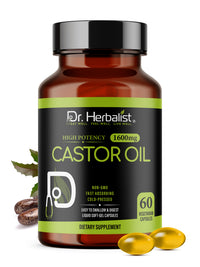
| Capsules | Convenient supplement dosing | Taste-free; measured servings for internal wellness support |
| Gummies | Enjoyable daily routine | Chewable and flavored; easy to take without water |
How to Use Castor Oil
For topical use, apply a small amount to hair, scalp, or skin; many people blend castor oil with a lighter carrier oil. For capsules and gummies, follow your product label. Do not exceed recommended servings, as castor oil is strong.
Safety & Quality
Topical castor oil is generally well tolerated; do a patch test first. Taken internally it can have a strong effect, so follow label directions and do not overuse. Pregnant or nursing individuals and those on medication should consult a healthcare provider first. Choose only lab-tested, GMP-manufactured products with verified quality.
Why Dr. Herbalist
Dr. Herbalist castor products are halal, GMP-manufactured, and third-party tested for quality and contaminants. Explore our Castor products and see our FAQ for more.
Related reading: Castor Oil Gummies: A Traditional Staple, Made Convenient
Frequently Asked Questions
Can I use castor oil on my hair? Yes, topical castor oil is popular for conditioning hair, scalp, lashes, and brows; blend with a carrier oil.
Oil, capsules, or gummies? Oil is for topical care; capsules and gummies are convenient supplement forms.
Is castor oil safe to take internally? It is strong; follow label directions and do not overuse. Consult your provider if unsure.
Should I patch test the oil? Yes, always patch test before broader topical use.
References
1. Vieira C, et al. Effect of ricinoleic acid in acute and subchronic experimental models of inflammation. Mediators Inflamm. 2000;9(5):223-228. View study
2. Patel VR, et al. Castor Oil: Properties, Uses, and Optimization of Processing Parameters. Lipid Insights. 2016;9:1-12. View study
3. Vieira C, et al. Pro-inflammatory and anti-inflammatory actions of ricinoleic acid. Naunyn Schmiedebergs Arch Pharmacol. 2001;364(2):87-95. View study
These statements have not been evaluated by the Food and Drug Administration. This product is not intended to diagnose, treat, cure, or prevent any disease.
Explore the Dr. Herbalist range
Dr. Herbalist Rosemary & Castor Oil Blend 120mL · Dr. Herbalist Castor Oil Gummies (90 Gummies) · Dr. Herbalist Castor Oil Gummies (60 Gummies) · Castor Oil Capsules 1600mg